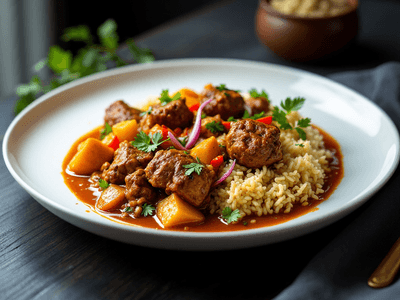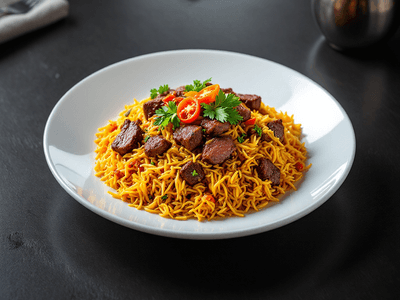
Wagyu Beef Biryani
India • Vegetarian
How to Make Vegetarian Biryani (Traditional & Healthy Version)
Vegetarian Biryani is a timeless Indian dish that showcases the rich flavors and vibrant colors of Indian cuisine. Traditionally prepared in households across India, biryani brings together aromatic basmati chawal, assorted vegetables, and a medley of spices like elaichi, laung, and dalchini to create a dish that’s as festive as it is nourishing. Popular during celebrations like Diwali and Eid, biryani is often the centerpiece of family gatherings and festive feasts. This healthy version focuses on retaining authentic flavors while using less oil and fresh, seasonal sabzi to keep calories in check. The taste is deeply satisfying, with layers of spices and the subtle sweetness of veggies blending into the fluffy, fragrant rice. Whether enjoyed at home or served during festivals, vegetarian biryani is a snack that delights all ages and dietary preferences.
Ingredients(for 1 medium bowl per serving)
- 1 cup Basmati rice (chawal)
- 1 cup Mixed vegetables (carrot, beans, matar (peas), cauliflower)
- 1 medium Onion (pyaz, sliced)
- 1 medium Tomato (tamatar, chopped)
- 1/2 cup Low-fat curd (dahi)
- 1 tsp Ginger-garlic paste (adrak-lahsun paste)
- 1 Green chili (hari mirch, slit) - optional
- 1 tbsp Biryani masala (homemade or store-bought)
- 2 tbsp Coriander leaves (dhaniya, chopped)
- 1 tbsp Mint leaves (pudina, chopped)
- 1 tbsp Oil (preferably mustard or olive)
- to taste Salt (namak)
- 1/2 tsp Whole spices (elaichi, laung, dalchini)
Instructions
- 1
Wash basmati chawal thoroughly and soak for 10 minutes. Drain and keep aside.
5 minutes
Soaking rice gives fluffier grains.
- 2
Heat oil in a kadhai or heavy-bottomed pan. Add whole spices (elaichi, laung, dalchini) and sauté until fragrant.
2 minutes
Don't burn the spices; keep flame medium.
- 3
Add sliced pyaz and sauté till golden brown. Mix in ginger-garlic paste and slit hari mirch, cook for 1 minute.
3 minutes
Stir continuously for even browning.
- 4
Add chopped tamatar and cook till soft. Stir in curd, biryani masala, and salt. Cook for another 2 minutes.
3 minutes
Adding dahi gives a creamy texture with less oil.
Why This Dish is Healthy
This biryani is a healthy choice as it uses whole grains, fresh vegetables, and protein-rich curd, making it nutrient-dense and lower in calories than traditional versions. Cooking with less oil and skipping deep-frying ensures it fits well into weight management and diabetic-friendly diets. Its high fiber and moderate protein content help with satiety, digestion, and muscle repair.
Vegetarian biryani is a balanced dish, providing complex carbohydrates from basmati rice and high-quality plant protein from peas and curd. The inclusion of assorted vegetables boosts fiber, vitamins A and C, folate, and minerals like potassium and magnesium. Spices like ginger, garlic, and mint offer anti-inflammatory and digestive benefits. Using minimal oil and low-fat dahi keeps saturated fat low while retaining authentic flavor.
Pro Tips
- 💡Tip 1: Use aged basmati rice for best aroma and texture.
- 💡Tip 2: Add a pinch of saffron soaked in warm milk for festive flavor.
- 💡Tip 3: Layer rice and veggies for traditional dum-style biryani.
Storage & Serving
Store leftover biryani in an airtight dabba in the refrigerator for up to 2 days. Reheat in a microwave or on tawa with a sprinkle of water to retain moisture.
Best served: Lunch
Nutrition Facts
| Nutrient | Per 100g |
|---|---|
| Energy | 750.0 kcal |