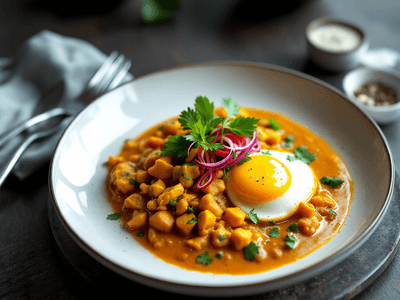
Sri Lankan Egg Curry
Sri Lanka • halal_safe
How to Make Sri Lankan Egg Curry (Traditional & Healthy Version)
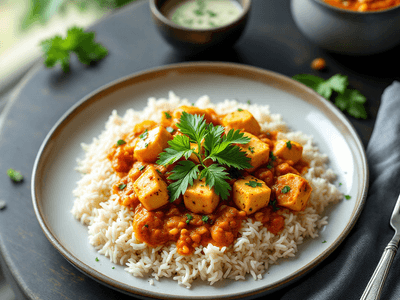
Sri Lankan Egg Curry, known for its rich and aromatic flavors, is a delightful vegetarian snack enjoyed across South India, especially in Tamil Nadu, which shares culinary traditions with the island neighbor. This dish is celebrated for its unique blend of hard-boiled eggs simmered in a coconut-based gravy infused with curry leaves, mustard seeds, and a medley of Indian spices like turmeric (haldi), coriander (dhaniya), and red chilli powder. The curry is both comforting and deeply satisfying, making it a popular choice during monsoons and festive gatherings such as Pongal or family get-togethers. Egg curry variations are common in Indian kitchens, but the Sri Lankan style stands out due to its creamy coconut milk (“nariyal doodh”) base and subtle tang from tamarind (“imli”). The dish is usually served hot with steamed rice, “idiyappam” (string hoppers), or chapati (atta roti), making it versatile for breakfast or lunch. Its nourishing ingredients and simple preparation make it a favorite among health-conscious families, as well as those seeking authentic regional flavors. Enjoy the lively flavors of South Indian spices while savoring a high-protein, filling snack that resonates with traditional Indian cooking.
Ingredients(for 1 bowl (with 2 eggs and curry))
- 4 Eggs (anda) (hard-boiled)
- 1 medium Onion (pyaz) (finely chopped)
- 1 large Tomato (tamatar) (finely chopped)
- 1 cup Coconut milk (nariyal doodh) (fresh or canned)
- 1 tbsp Ginger-garlic paste (adrak-lahsun) (freshly ground)
- 10-12 Curry leaves (kadi patta)
- 1/2 tsp Mustard seeds (rai)
- 1/2 tsp Turmeric powder (haldi)
- 1 tsp Red chilli powder (lal mirch) (adjust to taste)
- 1 tsp Coriander powder (dhaniya)
- 1 tbsp Tamarind pulp (imli) (soaked and strained)
- to taste Salt
- 1 tbsp Oil (preferably coconut or mustard)
- 1 Green chilli (hari mirch) (slit) - optional
- 2 tbsp Fresh coriander leaves (dhaniya patta) (chopped, for garnish) - optional
Instructions
- 1
Boil the eggs in sufficient water for 10 minutes until cooked. Peel and keep aside.
10 minutes
Add a pinch of salt while boiling to prevent egg shells from cracking.
- 2
Heat oil in a kadhai or deep pan. Add mustard seeds and let them splutter. Add curry leaves and sauté for a few seconds.
2 minutes
Use coconut oil for authentic flavor and aroma.
- 3
Add chopped onions and sauté till golden brown. Stir in ginger-garlic paste and cook until raw smell disappears.
3 minutes
Keep flame medium to prevent burning.
- 4
Add chopped tomatoes, turmeric, red chilli powder, coriander powder, and salt. Cook until tomatoes are soft and oil separates.
5 minutes
Mash tomatoes for a smoother gravy.
Why This Dish is Healthy
This dish combines lean protein from eggs and heart-healthy fat from coconut milk, making it nourishing and filling without excessive calories. The use of fresh spices, minimal oil, and zero refined products ensures a balanced meal rich in micronutrients and antioxidants. It keeps you satisfied for longer, supports muscle health, and aids weight management, making it an excellent choice for fitness enthusiasts as well as families focused on wholesome eating.
Sri Lankan Egg Curry is packed with high-quality protein from eggs, vitamins such as B12, and minerals like iron and selenium. Coconut milk provides healthy fats and antioxidants, while the use of tomatoes, onions, and spices adds dietary fiber, Vitamin C, and anti-inflammatory benefits. Curry leaves and mustard seeds further boost digestion and metabolism. With moderate oil and no heavy cream, this recipe is lighter than typical curries, making it suitable for calorie-conscious eaters.
Pro Tips
- 💡Tip 1: Prick eggs with a fork before adding to curry for maximum flavor infusion.
- 💡Tip 2: Use freshly extracted coconut milk for the best taste and creamy texture.
- 💡Tip 3: Add a handful of curry leaves for authentic aroma and health benefits.
Storage & Serving
Refrigerate leftovers in an airtight container for up to 2 days. Reheat gently on a tawa or in a pan, adding a splash of water if needed.
Best served: Breakfast or Lunch
Nutrition Facts
| Nutrient | Per 100g |
|---|---|
| Energy | 210.0 kcal |
| Protein | 6.1 g |
| Carbohydrates | 4.8 g |
| Total Fat | 8.7 g |
| Fiber | 1.2 g |
| Sugars | 2.0 g |
| Iron | 1.5 mg |
| Calcium | 56.0 mg |
| Sodium | 320.0 mg |
| Potassium | 180.0 mg |
| Cholesterol | 190.0 mg |
| Vitamin A | 210.0 IU |
| Vitamin C | 7.0 mg |
| Magnesium | 18.0 mg |
| Zinc | 0.7 mg |
| Phosphorus | 110.0 mg |
| Vitamin D | 1.8 IU |
| Vitamin B1 (Thiamine) | 0.1 mg |
| Vitamin B2 (Riboflavin) | 0.2 mg |
| Vitamin B3 (Niacin) | 0.1 mg |
| Vitamin B6 | 0.1 mg |
| Vitamin B12 | 0.8 µg |
| Folate | 28.0 µg |