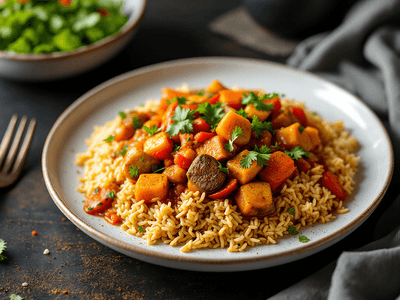
Nasi Dagang with Vegetable Curry
Malaysian • All Foods
How to Make Nasi Dagang with Vegetable Curry (Traditional & Healthy Version)
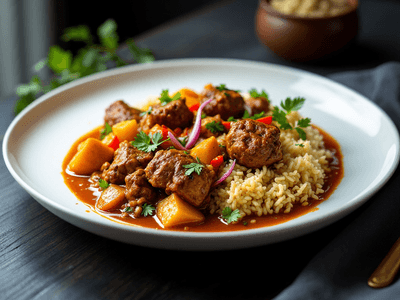
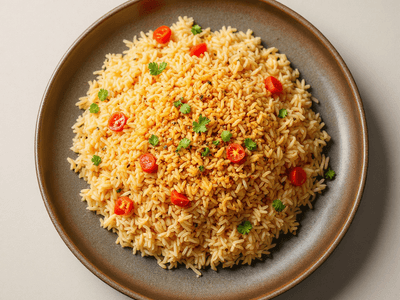
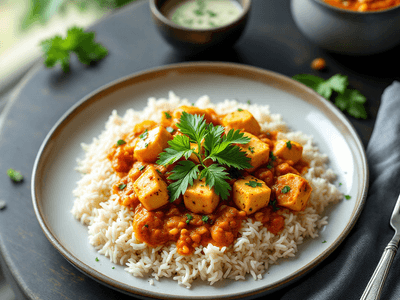
Nasi Dagang is a cherished Malaysian dish, renowned for its fragrant rice and vibrant accompaniments. Traditionally hailing from the east coast, especially Terengganu and Kelantan, this beloved meal is a hallmark of Malaysian multicultural cuisine. The rice, often a blend of white and glutinous varieties, is gently steamed with aromatic pandan leaves and infused with santan (coconut milk), resulting in a subtle, creamy richness. Paired with a wholesome vegetable curry, this vegetarian adaptation honors the classic flavors while focusing on health-conscious cooking. The vegetable curry brims with local produce—eggplant, carrots, and long beans—simmered in a delicate coconut gravy seasoned with fresh lemongrass, ginger, and turmeric. Nasi Dagang with Vegetable Curry is a satisfying snack or light meal, perfect for breakfast or lunch. It celebrates Malaysian heritage, local ingredients, and the harmonious blend of Malay, Chinese, and Indian culinary influences, making it a nutritious and delicious choice for anyone keen to enjoy authentic Malaysian food.
Ingredients(for One generous plate of Nasi Dagang with Vegetable Curry per serving)
- 1 cup Nasi Dagang rice blend (mix of white and glutinous rice (beras nasi dagang))
- 1/2 cup Santan (coconut milk) (fresh preferred)
- 1 leaf Pandan leaf (tied into a knot)
- 1/2 tsp Salt
- 100g Eggplant (cut into cubes)
- 1 medium Carrot (sliced)
- 50g Long beans (cut into 2-inch segments)
- 1 small Potato (diced)
- 1 stalk Lemongrass (bruised)
- 1-inch piece Ginger (sliced)
- 1/2 tsp Turmeric powder
- 1 Chili (sliced, adjust to spice preference) - optional
- 1 tbsp Cooking oil (preferably canola or sunflower)
Instructions
- 1
Rinse the nasi dagang rice blend thoroughly until water runs clear. Soak for at least 1 hour for best texture.
5 minutes
Soaking helps the rice cook evenly and become fluffier.
- 2
Drain rice and add to a steamer. Pour in santan, salt, and pandan leaf. Steam over medium heat until rice is cooked and aromatic.
15 minutes
Cover rice with a clean cloth during steaming for fluffier grains.
- 3
Heat cooking oil in a pan. Add ginger and lemongrass, sauté until fragrant.
2 minutes
Sautéing spices releases essential oils for deeper flavor.
- 4
Add carrot, potato, and eggplant. Stir-fry for 2 minutes until slightly softened.
2 minutes
Cut vegetables evenly for uniform cooking.
Why This Dish is Healthy
Nasi Dagang with Vegetable Curry is a healthy Malaysian snack thanks to its emphasis on whole, unprocessed ingredients and minimal oil. Swapping traditional fish curry for a vegetable version reduces saturated fat and cholesterol, making it suitable for vegetarians and health-conscious eaters. The recipe is rich in fiber and contains a variety of micronutrients essential for overall wellness, perfect for maintaining a balanced diet.
This dish is packed with dietary fiber from vegetables like eggplant, carrots, and long beans, supporting digestive health. The use of santan (coconut milk) adds healthy fats, while the rice blend provides complex carbohydrates for sustained energy. Essential vitamins such as vitamin A, C, and minerals like potassium and magnesium are present, making it a balanced vegetarian meal. Ginger, turmeric, and lemongrass offer antioxidants and anti-inflammatory benefits.
Pro Tips
- 💡Tip 1: Use fresh santan for a richer, more authentic flavor.
- 💡Tip 2: Tie pandan leaf into a knot for easy removal and enhanced aroma.
- 💡Tip 3: Bruising lemongrass releases more flavor into the curry.
Storage & Serving
Store leftover rice and curry separately in airtight containers in the refrigerator for up to 2 days. Reheat gently before serving; add a splash of water to curry if needed to restore consistency.
Best served: Breakfast or Lunch
Nutrition Facts
| Nutrient | Per 100g |
|---|---|
| Energy | 470.0 kcal |
| Protein | 4.8 g |
| Carbohydrates | 26.0 g |
| Total Fat | 3.5 g |
| Fiber | 2.6 g |
| Sugars | 1.8 g |
| Sodium | 230.0 mg |
| Potassium | 140.0 mg |
| Cholesterol | 0.0 mg |
| Vitamin A | 320.0 IU |
| Vitamin C | 7.0 mg |
| Calcium | 38.0 mg |
| Iron | 1.2 mg |
| Magnesium | 22.0 mg |
| Zinc | 0.5 mg |
| Phosphorus | 62.0 mg |
| Vitamin D | 0.0 IU |
| Vitamin B1 (Thiamine) | 0.1 mg |
| Vitamin B2 (Riboflavin) | 0.0 mg |
| Vitamin B3 (Niacin) | 1.1 mg |
| Vitamin B6 | 0.1 mg |
| Vitamin B12 | 0.0 µg |
| Folate | 21.0 µg |