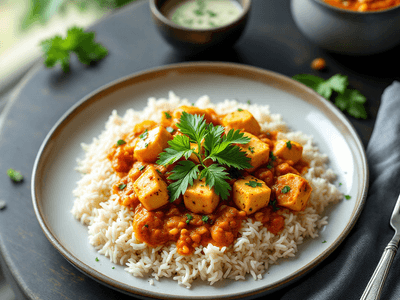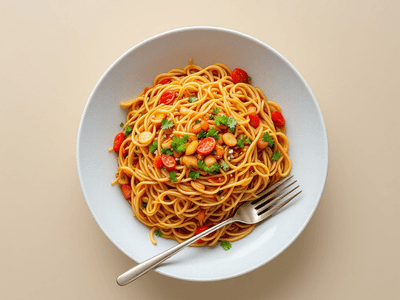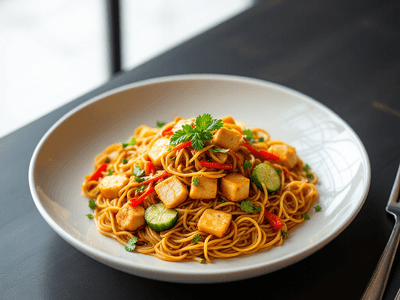
Mee Siam with Tofu
Malaysian • All Foods
How to Make Mee Siam with Tofu (Traditional & Healthy Version)
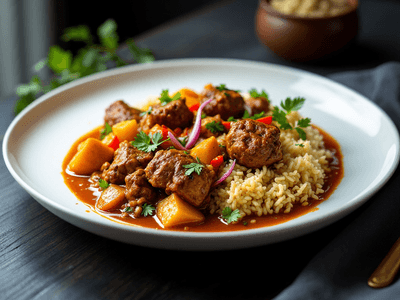
Mee Siam with Tofu is a beloved Malaysian snack that showcases the vibrant multicultural heritage of Malaysia’s cuisine. Originating from the Peranakan community, Mee Siam is traditionally made with rice vermicelli, infused with tangy, spicy, and slightly sweet flavors. The addition of tofu creates a wholesome vegetarian twist, making it suitable for health-conscious eaters and those seeking meat-free options. This dish combines local ingredients such as tauhu (tofu), taugeh (bean sprouts), limau kasturi (calamansi lime), and aromatic spices like serai (lemongrass) and daun pandan (pandan leaf). Mee Siam is often enjoyed as a breakfast or lunch meal in Malaysian homes and kopitiams, especially in states like Penang and Johor, reflecting the rich blend of Malay, Chinese, and Indian culinary traditions. The harmonious balance of sour, spicy, and sweet makes Mee Siam with Tofu a favorite for both locals and visitors, offering a lighter yet satisfying snack with plenty of authentic Malaysian flavor.
Ingredients(for One bowl (about 350g) per serving)
- 120g Rice vermicelli (bihun)
- 150g Firm tofu (tauhu, cut into cubes)
- 1 cup Bean sprouts (taugeh)
- 2 Eggs (optional, omit for vegan) - optional
- 4 Shallots (finely sliced)
- 3 cloves Garlic (minced)
- 5 Dried chillies (soaked and blended)
- 2 tbsp Tamarind paste (asam jawa)
- 2 tbsp Light soy sauce
- 1 stalk Lemongrass (serai, smashed)
- 1 Pandan leaf (daun pandan, tied into a knot)
- 2 Calamansi lime (limau kasturi, halved)
- 1 tbsp Cooking oil (preferably canola or sunflower)
- 1/2 tsp Salt
Instructions
- 1
Soak rice vermicelli (bihun) in warm water for 5 minutes until softened. Drain and set aside.
5 minutes
Do not over-soak bihun to prevent mushy texture.
- 2
Heat oil in a large wok. Sauté sliced shallots, garlic, and blended dried chillies until aromatic and oil separates.
5 minutes
Stir constantly to prevent burning the aromatics.
- 3
Add tamarind paste, light soy sauce, salt, smashed lemongrass, and pandan leaf. Mix well and simmer for 2 minutes.
2 minutes
Simmering helps infuse flavors from lemongrass and pandan.
- 4
Add cubed tofu and gently stir to coat with the spice paste. Fry for another 3 minutes until tofu is slightly golden.
3 minutes
Use firm tauhu for best texture; pan-fry separately for extra crispiness.
Why This Dish is Healthy
This version of Mee Siam is healthy because it uses firm tofu for protein, skips deep-frying, and incorporates plenty of bean sprouts and fresh herbs. The dish is lower in calories and saturated fat, making it suitable for weight management and heart health. Using local fresh ingredients ensures maximum nutrient retention and supports a balanced vegetarian diet.
Mee Siam with Tofu is a nutritious, well-balanced dish, offering complex carbohydrates from bihun, plant-based protein from tauhu, and vitamins from fresh taugeh and aromatics. The addition of lemongrass and pandan brings antioxidants and essential minerals. The minimal use of oil makes it lower in fat compared to traditional versions. This dish is rich in dietary fiber, vitamin C, and B vitamins, supporting digestive health and energy metabolism.
Pro Tips
- 💡Tip 1: Always use fresh tauhu and taugeh for best texture and nutrition.
- 💡Tip 2: Adjust the number of dried chillies to control the spice level for your family.
- 💡Tip 3: Squeeze limau kasturi only before serving to preserve its fresh tanginess.
Storage & Serving
Store leftovers in an airtight container in the fridge for up to 2 days. Reheat gently in a pan, adding a splash of water to keep noodles moist. Best consumed fresh for optimal taste and texture.
Best served: Breakfast or Lunch
Nutrition Facts
| Nutrient | Per 100g |
|---|---|
| Energy | 420.0 kcal |
| Protein | 5.2 g |
| Carbohydrates | 21.5 g |
| Total Fat | 4.8 g |
| Fiber | 2.3 g |
| Sugars | 3.1 g |
| Iron | 1.2 mg |
| Calcium | 68.0 mg |
| Sodium | 410.0 mg |
| Potassium | 170.0 mg |
| Cholesterol | 0.0 mg |
| Vitamin A | 45.0 IU |
| Vitamin C | 6.0 mg |
| Magnesium | 32.0 mg |
| Zinc | 0.7 mg |
| Phosphorus | 88.0 mg |
| Vitamin D | 0.0 IU |
| Vitamin B1 (Thiamine) | 0.1 mg |
| Vitamin B2 (Riboflavin) | 0.0 mg |
| Vitamin B3 (Niacin) | 0.6 mg |
| Vitamin B6 | 0.1 mg |
| Vitamin B12 | 0.0 µg |
| Folate | 22.0 µg |