Nasi Goreng with Chicken
Indonesian • All Foods
How to Make Vegetarian Nasi Goreng (Traditional & Healthy Version)
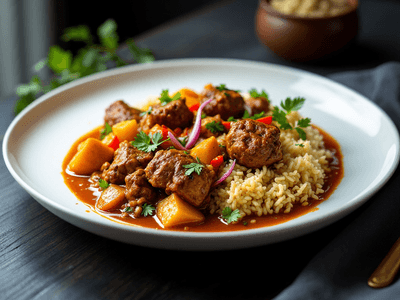
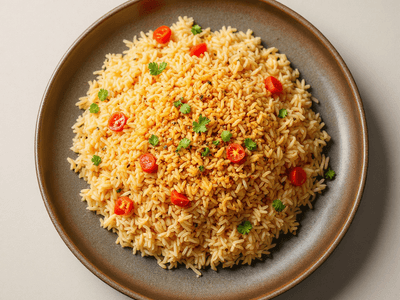
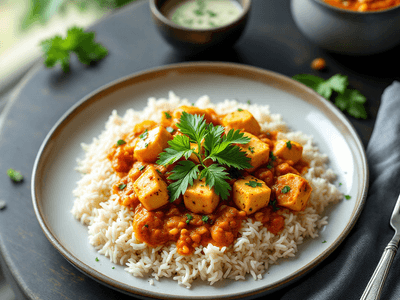
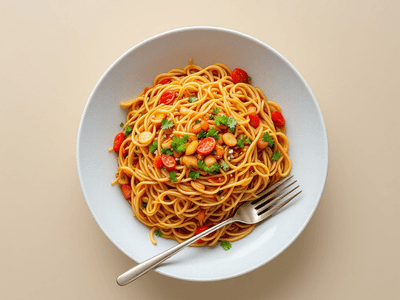
Nasi Goreng is Indonesia’s beloved fried rice dish, now enjoyed around the world for its bold flavors and versatility. Traditionally, it combines aromatic spices, leftover rice, and protein, making it a comforting and hearty meal. In this healthy vegetarian adaptation, we use wholesome Indian ingredients to create a nutritious version that fits seamlessly into the Indian palate. The dish is reminiscent of Indian fried rice (tawa pulao), but with an Indonesian twist—using a blend of soy sauce, garlic, and fresh veggies for a rich, umami taste. For health-conscious Indian families, Nasi Goreng is an excellent snack or light meal option, especially when made with brown rice and loaded with veggies. The fusion of Indonesian flavors with Indian cooking techniques (like using a kadhai or tawa) makes it easy to prepare while ensuring authenticity. It’s perfect for those tracking calories and seeking a protein-rich, fiber-filled meal. Whether served for breakfast or lunch, vegetarian Nasi Goreng offers an exciting way to enjoy global flavors in an Indian kitchen.
Ingredients(for 1 bowl (approx. 200g))
- 1 cup cooked Brown rice (preferably cooled overnight)
- 100g, diced Paneer (fresh cottage cheese)
- 1 small, finely chopped Carrot
- 1/2 medium, diced Capsicum (shimla mirch)
- 2, chopped Spring onion (use both white and green parts)
- 3 cloves, minced Garlic
- 1 tablespoon Soy sauce (low sodium)
- 1/2 teaspoon Red chilli powder (adjust to taste)
- 1/4 teaspoon Black pepper (freshly ground)
- 1 tablespoon Sesame oil (cold pressed)
- to taste Salt
- 1 teaspoon Lemon juice (freshly squeezed) - optional
- 2 tablespoons, chopped Coriander leaves (dhaniya) - optional
Instructions
- 1
Prepare all vegetables: finely chop carrot, capsicum, and spring onions. Mince the garlic and dice paneer.
5 minutes
Use fresh, seasonal vegetables for maximum nutrition.
- 2
Heat the sesame oil in a heavy kadhai or tawa on medium flame. Add minced garlic and sauté until aromatic.
3 minutes
Do not burn garlic; it should turn light golden.
- 3
Add chopped carrot, capsicum, and white part of spring onion. Stir-fry for 2-3 minutes till veggies are slightly tender but still crisp.
3 minutes
High heat retains veggies’ crunch and nutrients.
- 4
Add paneer cubes and toss gently. Sprinkle red chilli powder and black pepper. Sauté for another 2 minutes.
2 minutes
Paneer adds protein and creaminess—avoid overcooking.
Why This Dish is Healthy
This recipe is a healthy choice because it replaces white rice with brown rice, adds ample vegetables, and uses paneer for high-quality vegetarian protein. It’s prepared with minimal oil, uses low sodium soy sauce, and is free from deep frying. Each serving provides a balanced mix of macros and is naturally low in saturated fat, making it suitable for weight loss, diabetics, and family meals.
Vegetarian Nasi Goreng is rich in protein from paneer, fiber from brown rice and vegetables, and essential amino acids. The dish offers vitamin A (carrot), vitamin C (capsicum, spring onion), and minerals like calcium and iron. Using sesame oil provides healthy fats while keeping overall calories in check. This balanced meal supports muscle growth, digestion, and immunity, making it ideal for calorie-conscious eaters.
Pro Tips
- 💡Tip 1: Use leftover rice for best texture and flavor.
- 💡Tip 2: Stir-fry vegetables on high heat to retain crunch.
- 💡Tip 3: Add a pinch of garam masala for an Indian twist.
- 💡Tip 4: Use tofu instead of paneer for vegan version.
- 💡Tip 5: Sprinkle roasted peanuts for added crunch and protein.
Storage & Serving
Keeps for 6-8 hours at room temperature. Refrigerate for up to 2 days.
Best served: Breakfast or Lunch
Nutrition Facts
| Nutrient | Per 100g |
|---|---|
| Energy | 450.0 kcal |
| Protein | 6.5 g |
| Carbohydrates | 23.0 g |
| Total Fat | 5.0 g |
| Fiber | 1.2 g |
| Sugars | 1.5 g |
| Iron | 0.9 mg |
| Calcium | 16.0 mg |
| Sodium | 390.0 mg |
| Potassium | 160.0 mg |
| Cholesterol | 28.0 mg |
| Vitamin A | 60.0 IU |
| Vitamin C | 3.0 mg |
| Magnesium | 18.0 mg |
| Zinc | 0.7 mg |
| Phosphorus | 75.0 mg |
| Vitamin D | 0.3 IU |
| Vitamin B1 (Thiamine) | 0.1 mg |
| Vitamin B2 (Riboflavin) | 0.1 mg |
| Vitamin B3 (Niacin) | 1.8 mg |
| Vitamin B6 | 0.1 mg |
| Vitamin B12 | 0.2 µg |
| Folate | 16.0 µg |