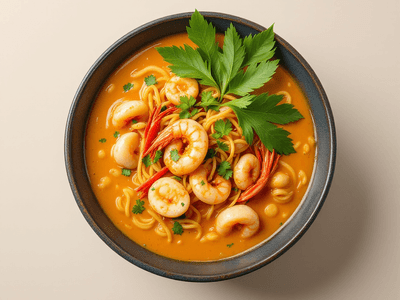
Seafood Laksa
East Indian • All Foods
How to Make Vegetarian Laksa (Traditional & Healthy Version)
Laksa is a beloved noodle soup originating from Southeast Asia, especially popular in Malaysia, Singapore, and Indonesia. Traditionally, laksa features a rich coconut milk broth infused with aromatic spices and seafood. However, our Indian-inspired vegetarian laksa delivers the same vibrant flavors while being health-conscious and suitable for vegetarians. This version is perfect for Indian tastebuds, utilizing familiar ingredients like tofu and assorted vegetables, making it a nourishing snack or light meal. The taste of vegetarian laksa is a delightful blend of creamy coconut, tangy tamarind, and gentle heat from red chilies, balanced with fresh herbs like coriander and mint. It's a comforting bowl that bridges Southeast Asian flavors with Indian culinary sensibilities. Laksa is a satisfying, protein-rich dish, ideal for those seeking a wholesome, light, and aromatic snack. With its blend of spices and plant-based protein, it resonates well with Indian food lovers who appreciate dishes that are both flavorful and healthy.
Ingredients(for 1 large bowl (approx. 350 ml))
- 100 grams Rice noodles (thin variety)
- 100 grams Tofu (firm, cubed)
- 200 ml Coconut milk (light or regular)
- 1/2 cup Carrots (julienned)
- 1/2 cup Bell pepper (sliced)
- 1/2 cup Bean sprouts (fresh, for garnish) - optional
- 1 small Onion (finely chopped)
- 3 cloves Garlic (minced)
- 1 inch Ginger (grated)
- 1 tbsp Red chili paste (adjust to taste)
- 1 tsp Tamarind paste (imli paste)
- 1 Lime (wedges for serving) - optional
- 2 tbsp Fresh coriander leaves (chopped, for garnish)
- to taste Salt
- 1 tsp Oil (preferably sesame or sunflower)
Instructions
- 1
Cook rice noodles according to package instructions. Drain and set aside.
5 minutes
Rinse noodles in cold water to prevent sticking.
- 2
Heat oil in a kadhai or deep pan. Add onions, garlic, and ginger. Sauté until fragrant.
3 minutes
Stir constantly to avoid burning the aromatics.
- 3
Add red chili paste and cook for 1-2 minutes until oil separates.
2 minutes
Adjust chili paste for a milder or spicier laksa.
- 4
Stir in carrots and bell pepper. Sauté for 2 minutes to soften slightly.
2 minutes
For extra nutrition, add spinach or broccoli.
Why This Dish is Healthy
This vegetarian laksa recipe is a healthy twist on the traditional seafood version. It uses plant-based proteins, a variety of fiber-rich vegetables, and heart-healthy coconut milk. Minimal oil and the absence of deep-frying make it low in unnecessary fats, while the use of fresh herbs and spices boosts immunity and overall wellness. It’s a wholesome, filling meal that supports balanced nutrition and weight management.
Vegetarian laksa is a nourishing, balanced meal rich in protein from tofu, complex carbs from rice noodles, and healthy fats from coconut milk. The dish is packed with vitamins A and C from colorful vegetables and antioxidants from fresh herbs. Using light coconut milk and minimal oil reduces saturated fat, making it suitable for heart health. The addition of ginger, garlic, and tamarind enhances digestion and provides anti-inflammatory benefits.
Pro Tips
- 💡Tip 1: Use fresh, firm tofu for best texture in the broth.
- 💡Tip 2: Adjust chili paste to match your spice preference.
- 💡Tip 3: Add a dash of soy sauce or lemon juice for extra umami.
- 💡Tip 4: Use homemade coconut milk for richer flavor.
- 💡Tip 5: Avoid overcooking the vegetables to retain their crunch and nutrients.
Storage & Serving
Laksa broth can be refrigerated for up to 2 days. Store noodles and garnishes separately for the freshest taste. Reheat gently before serving.
Best served: Lunch or as an evening snack
Nutrition Facts
| Nutrient | Per 100g |
|---|---|
| Energy | 120.0 kcal |
| Protein | 6.0 g |
| Carbohydrates | 13.0 g |
| Total Fat | 5.0 g |
| Fiber | 1.0 g |
| Sugars | 2.1 g |
| Sodium | 520.0 mg |
| Potassium | 210.0 mg |
| Cholesterol | 28.0 mg |
| Vitamin A | 110.0 IU |
| Vitamin C | 3.5 mg |
| Calcium | 52.0 mg |
| Iron | 1.1 mg |
| Magnesium | 24.0 mg |
| Zinc | 0.7 mg |
| Phosphorus | 90.0 mg |
| Vitamin D | 1.2 IU |
| Vitamin B1 (Thiamine) | 0.1 mg |
| Vitamin B2 (Riboflavin) | 0.0 mg |
| Vitamin B3 (Niacin) | 1.1 mg |
| Vitamin B6 | 0.1 mg |
| Vitamin B12 | 0.6 µg |
| Folate | 14.0 µg |