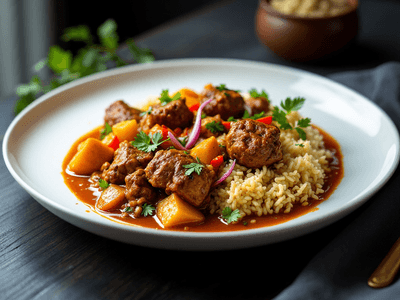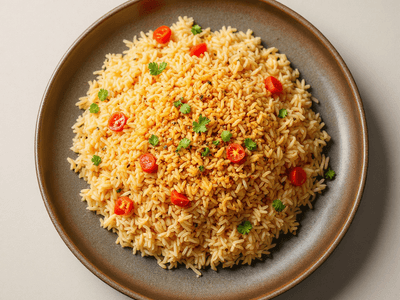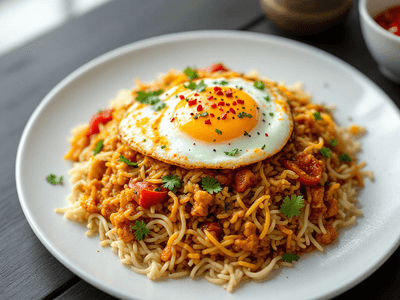
Nasi Lemak with Egg
East Indian • All Foods
How to Make Nasi Lemak with Egg (Traditional & Healthy Version)
Nasi Lemak is a beloved staple across Malaysia and Southeast Asia, celebrated for its aromatic coconut rice and hearty accompaniments. Traditionally served as a breakfast or snack, Nasi Lemak gets its name from 'lemak', meaning 'rich' in Malay, which refers to the creamy coconut-infused rice. This vegetarian adaptation with egg is a wholesome, satisfying option that also fits Indian dietary preferences, making it perfect for calorie-conscious food lovers. While Nasi Lemak is not originally from India, its flavors and ingredients resonate with Indian cuisine, especially in regions like Kerala and Tamil Nadu, where coconut is a key ingredient. The dish combines mildly spiced sambal (chili sauce), crunchy peanuts, and refreshing cucumber, making it a complete meal. IndianCalorie users will appreciate how this version balances authentic Southeast Asian taste with health-conscious modifications, focusing on plant-based ingredients and minimal oil. Nasi Lemak with Egg is a nutritious snack that can be enjoyed by vegetarians, and its rich, comforting flavors make it a popular choice for breakfast or lunch. The inclusion of boiled eggs boosts protein, while coconut rice and vegetables ensure satiety and balanced nutrition, all in a lighter, healthier format suited to modern Indian kitchens.
Ingredients(for 1 plate coconut rice + 1 boiled egg + sambal + peanuts + cucumber)
- 1 cup Short-grain rice (preferably basmati or jasmine)
- 1 cup Light coconut milk (for reduced fat)
- 1 cup Water
- 1/2 tsp Salt (as per taste)
- 1 leaf Pandan leaf (optional, for aroma) - optional
- 2 Eggs (large, boiled)
- 2 tbsp Raw peanuts (roasted, unsalted)
- 1/2 Cucumber (sliced)
- 1 tsp Vegetable oil (for roasting peanuts) - optional
- 1 tbsp Red chili paste (for sambal)
- 1/4 cup Onion (finely chopped, for sambal)
- 2 cloves Garlic (minced, for sambal)
- 1 tsp Tamarind pulp (for sambal) - optional
- 1 tsp Jaggery or brown sugar (for sambal, optional) - optional
Instructions
- 1
Wash the rice thoroughly and drain. In a saucepan, combine rice, coconut milk, water, salt, and pandan leaf. Bring to a boil, then cover and simmer on low heat until rice is cooked and fluffy.
15 minutes
Use a heavy-bottomed vessel to prevent sticking.
- 2
While rice is cooking, boil eggs in a separate pot. Place eggs in cold water, bring to a boil, then simmer for 8-10 minutes until hard-boiled. Cool and peel.
10 minutes
Add a pinch of salt to water for easier peeling.
- 3
Roast raw peanuts in a pan with 1 tsp oil until golden and crunchy. Set aside.
5 minutes
Stir constantly to avoid burning.
- 4
Prepare sambal: Sauté chopped onions and garlic in a little oil until soft. Add chili paste, tamarind pulp, and jaggery. Cook for 3-4 minutes until fragrant and slightly thickened.
5 minutes
Adjust spice level as needed for your palate.
Why This Dish is Healthy
Choosing light coconut milk and boiling instead of frying keeps calories lower, while the use of eggs and peanuts ensures a good protein intake. The dish is suitable for weight management and diabetes control if portioned correctly and enjoyed with plenty of vegetables. Using fresh ingredients and limiting added sugars makes this a heart-healthy, nutrient-dense meal, ideal for busy Indian households.
This vegetarian Nasi Lemak is balanced in macronutrients, offering complex carbs from rice, healthy fats from coconut milk (used in moderation), and quality protein from boiled eggs. Peanuts provide additional protein and essential minerals like magnesium and iron, while cucumber adds hydration and fiber. The sambal sauce uses minimal oil and natural ingredients, making it lighter than restaurant versions. The dish is rich in B vitamins, antioxidants, and is gluten-free if using non-wheat rice.
Pro Tips
- 💡Tip 1: Use light coconut milk for a creamy but healthier rice.
- 💡Tip 2: Add pandan leaf for authentic aroma and flavor.
- 💡Tip 3: Roast peanuts fresh for best crunch and taste.
- 💡Tip 4: Adjust sambal spice level for family preferences.
- 💡Tip 5: Serve with extra cucumber for hydration and fiber.
Storage & Serving
Keeps for 6-8 hours at room temperature. Refrigerate for up to 2 days in airtight container. Sambal can be stored separately.
Best served: Breakfast or Lunch
Nutrition Facts
| Nutrient | Per 100g |
|---|---|
| Energy | 450.0 kcal |
| Protein | 5.5 g |
| Carbohydrates | 22.0 g |
| Total Fat | 7.0 g |
| Fiber | 1.1 g |
| Sugars | 1.2 g |
| Iron | 1.1 mg |
| Calcium | 23.0 mg |
| Sodium | 180.0 mg |
| Potassium | 110.0 mg |
| Cholesterol | 80.0 mg |
| Vitamin A | 70.0 IU |
| Vitamin C | 1.0 mg |
| Magnesium | 20.0 mg |
| Zinc | 0.7 mg |
| Phosphorus | 90.0 mg |
| Vitamin D | 1.0 IU |
| Vitamin B1 (Thiamine) | 0.1 mg |
| Vitamin B2 (Riboflavin) | 0.1 mg |
| Vitamin B3 (Niacin) | 1.2 mg |
| Vitamin B6 | 0.1 mg |
| Vitamin B12 | 0.5 µg |
| Folate | 18.0 µg |