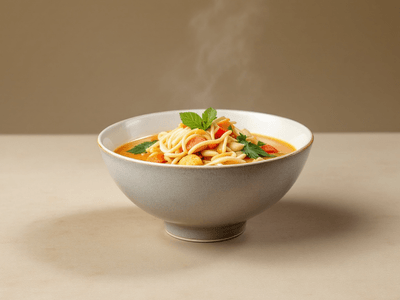
Vegetarian Curry Laksa
Global • veg
How to Make Vegetarian Curry Laksa (Traditional & Healthy Version)
Vegetarian Curry Laksa is a beloved Malaysian noodle soup that showcases the country's multicultural culinary heritage, blending influences from Malay, Chinese, and Indian cuisines. This aromatic dish features a rich, coconut-based broth (santan) infused with local spices like lemongrass, galangal, and fresh turmeric, delivering layers of flavor and fragrance unique to Malaysia. Typically enjoyed as a dinner or hearty lunch, Curry Laksa is renowned for its vibrant colors and harmonious combination of noodles, fresh vegetables, tofu, and herbs. What sets Malaysian Vegetarian Curry Laksa apart is its adaptability to healthy, plant-based eating while retaining authentic taste. The use of fresh pandan leaves, lemongrass (serai), and homemade spice paste elevates the soup, making it both nourishing and satisfying. This recipe is designed to be lighter in calories without compromising on flavor, making it perfect for calorie-conscious eaters. Whether you’re new to Malaysian cuisine or seeking a wholesome twist on a classic, Vegetarian Curry Laksa offers a comforting, flavorful experience.
Ingredients(for 1 large bowl with noodles, vegetables, and broth)
- 120g Rice vermicelli noodles (bihun)
- 150g Firm tofu (cubed)
- 200ml Coconut milk (santan)
- 500ml Vegetable broth
- 1 small Carrot (julienned)
- 1 cup Bean sprouts (taugeh)
- 1/2 cup Eggplant (cubed)
- 1 stalk Lemongrass (serai, bruised)
- 1 leaf Pandan leaf (knotted) - optional
- 2 tbsp Chili paste (homemade or store-bought)
- 1/2 inch Fresh turmeric (kunyit, grated) - optional
- 2 cloves Garlic (minced)
- 1 tbsp Cooking oil (preferably canola or sunflower)
- to taste Salt
- 2 tbsp Fresh coriander (chopped, for garnish) - optional
- 2 Lime wedges (for serving) - optional
Instructions
- 1
Prepare the bihun (rice vermicelli noodles) according to package instructions. Drain and set aside.
5 minutes
Soak noodles in hot water for a smoother texture.
- 2
Heat oil in a large pot over medium heat. Sauté garlic, chili paste, lemongrass, and turmeric until fragrant.
3 minutes
Use low heat to avoid burning the spices and release their aroma.
- 3
Add the eggplant and carrots to the pot. Stir-fry for 2-3 minutes until slightly softened.
3 minutes
Cut vegetables evenly for even cooking.
- 4
Pour in the vegetable broth and bring to a gentle boil. Add the pandan leaf and simmer for 5 minutes.
5 minutes
Pandan adds a subtle sweetness—remove before serving.
Why This Dish is Healthy
Choosing a vegetarian, coconut milk-based laksa reduces saturated fat and cholesterol compared to meat versions. The emphasis on vegetables, moderate use of santan, and lean protein from tofu make this dish heart-healthy and suitable for calorie-conscious diets. It’s also lower in sodium and free from processed ingredients, fitting well into most healthy eating plans.
This Vegetarian Curry Laksa is rich in fiber, vitamins A and C from the vegetables, and plant-based protein from tofu. The use of santan (coconut milk) provides healthy fats while keeping the recipe dairy-free. Lemongrass and turmeric offer antioxidants and anti-inflammatory properties. By using fresh, whole ingredients and limiting oil, this laksa supports a balanced diet with essential nutrients.
Pro Tips
- 💡Tip 1: Use fresh pandan and lemongrass for the most authentic aroma.
- 💡Tip 2: For a creamier broth, blend a small amount of tofu into the soup base.
- 💡Tip 3: Prepare all toppings in advance for easy serving and extra crunch.
Storage & Serving
Store leftover broth and noodles separately in airtight containers in the refrigerator for up to 2 days. Reheat gently to preserve the coconut milk’s texture. Assemble bowls fresh before serving.
Best served: Lunch or Dinner
Nutrition Facts
| Nutrient | Per 100g |
|---|---|
| Energy | 480.0 kcal |
| Protein | 17.0 g |
| Carbohydrates | 65.0 g |
| Total Fat | 18.0 g |
| Fiber | 2.1 g |
| Sugars | 1.7 g |
| Sodium | 320.0 mg |
| Potassium | 180.0 mg |
| Cholesterol | 0.0 mg |
| Vitamin A | 210.0 IU |
| Vitamin C | 7.0 mg |
| Calcium | 48.0 mg |
| Iron | 1.2 mg |
| Magnesium | 22.0 mg |
| Zinc | 0.5 mg |
| Phosphorus | 60.0 mg |
| Vitamin D | 0.0 IU |
| Vitamin B1 (Thiamine) | 0.1 mg |
| Vitamin B2 (Riboflavin) | 0.0 mg |
| Vitamin B3 (Niacin) | 0.8 mg |
| Vitamin B6 | 0.1 mg |
| Vitamin B12 | 0.0 µg |
| Folate | 22.0 µg |