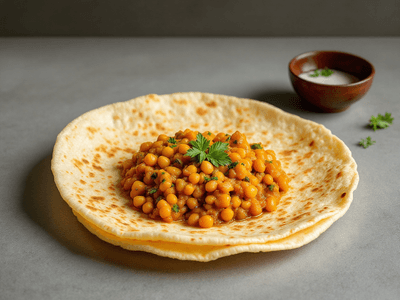
Tosai with Dhal
Global • veg
How to Make Tosai with Dhal (Traditional & Healthy Version)
Tosai with Dhal is a beloved Malaysian breakfast staple, enjoyed across the nation’s vibrant multicultural communities. This dish features Tosai—a light, crispy fermented rice and lentil pancake—paired with a hearty dhal, or lentil curry. Originating from South Indian influences, Tosai has been embraced and adapted by Malaysians, making its way into mamak stalls and home kitchens from Kuala Lumpur to Penang. The combination of Tosai’s tangy, crunchy edges and the fragrant, mildly spiced dhal makes for a satisfying, balanced meal. Malaysian Tosai is typically made with local ingredients such as daun pandan (pandan leaves) or a touch of halba (fenugreek seeds) to enhance the aroma and flavor, while the dhal is enriched with spices like kunyit (turmeric), jintan manis (fennel seeds), and fresh daun kari (curry leaves). The dish is naturally plant-based and packed with wholesome nutrients, making it a fantastic option for health-conscious eaters. Whether enjoyed for breakfast or a light lunch, Tosai with Dhal represents Malaysian multicultural cuisine at its best—simple, nourishing, and full of flavor.
Ingredients(for 2 Tosai pancakes with 1 cup dhal)
- 1 cup Rice (beras)
- 1/2 cup Urad dal (split black gram) (kacang dal urad)
- 1/2 tsp Fenugreek seeds (halba)
- 2 cups Water (for soaking and batter)
- 1/2 tsp Salt (garam)
- 2 tsp Cooking oil (minyak masak)
- 1/2 cup Yellow lentils (kacang dal kuning)
- 1 small Onion (bawang besar)
- 1 medium Tomato (tomato)
- 1/4 tsp Turmeric powder (serbuk kunyit)
- 6 leaves Curry leaves (daun kari)
- 1/2 tsp Mustard seeds (biji sawi)
- 1/2 tsp Cumin seeds (jintan putih)
- 1 Green chili (cili hijau, sliced) - optional
- 1 small Pandan leaf (daun pandan) - optional
Instructions
- 1
Rinse rice, urad dal, and fenugreek seeds. Soak together in water for 4 hours or overnight for better fermentation and nutrition.
5 minutes
Soaking improves digestibility and batter texture.
- 2
Drain and blend soaked mixture with a pandan leaf and enough water to a smooth, pourable batter. Cover and let ferment for 6-8 hours or overnight in a warm place.
5 minutes
Fermentation creates Tosai’s signature tang and boosts gut health.
- 3
Before cooking, add salt to the batter and gently mix. Heat a non-stick pan and lightly grease with oil.
2 minutes
Do not overmix; gentle folding keeps the batter airy.
- 4
Pour a ladleful of batter onto the pan, spreading it thin. Drizzle a few drops of oil around the edges. Cook until golden and crisp, about 2 minutes. Lift and serve.
3 minutes
For extra crisp Tosai, cook on medium-high heat and avoid flipping.
Why This Dish is Healthy
This dish is excellent for those seeking a healthy Malaysian breakfast. It is vegetarian, nutrient-dense, and made with whole foods, making it suitable for weight management and diabetes control. Fermentation of the Tosai batter supports gut health, while dhal provides lasting satiety, helping to curb cravings. With no added sugars and low saturated fat, Tosai with Dhal is a wholesome choice for all ages.
Tosai with Dhal offers a balanced macronutrient profile—low in fat, moderate in protein, and rich in complex carbohydrates from rice and lentils. Lentils are a great source of plant-based protein, dietary fiber, folate, magnesium, and iron, supporting heart health and digestion. The dish is naturally cholesterol-free and contains beneficial spices like turmeric, which has anti-inflammatory properties. Using minimal oil and no santan (coconut milk) keeps the calorie count low.
Pro Tips
- 💡Tip 1: Use a hot non-stick pan to get perfectly crisp Tosai.
- 💡Tip 2: Ferment batter overnight for authentic flavor and better nutrition.
- 💡Tip 3: Add pandan leaf to both Tosai and dhal for a uniquely Malaysian aroma.
Storage & Serving
Store leftover Tosai in an airtight container for up to 1 day; reheat in a dry pan. Dhal can be refrigerated for 2 days and reheated gently before serving. For best quality, eat fresh.
Best served: Breakfast or Lunch
Nutrition Facts
| Nutrient | Per 100g |
|---|---|
| Energy | 280.0 kcal |
| Protein | 9.0 g |
| Carbohydrates | 48.0 g |
| Total Fat | 5.0 g |
| Fiber | 2.9 g |
| Sugars | 1.1 g |
| Sodium | 220.0 mg |
| Potassium | 170.0 mg |
| Cholesterol | 0.0 mg |
| Vitamin A | 12.0 IU |
| Vitamin C | 1.8 mg |
| Calcium | 32.0 mg |
| Iron | 1.1 mg |
| Magnesium | 22.0 mg |
| Zinc | 0.7 mg |
| Phosphorus | 58.0 mg |
| Vitamin D | 0.0 IU |
| Vitamin B1 (Thiamine) | 0.1 mg |
| Vitamin B2 (Riboflavin) | 0.0 mg |
| Vitamin B3 (Niacin) | 0.7 mg |
| Vitamin B6 | 0.1 mg |
| Vitamin B12 | 0.0 µg |
| Folate | 36.0 µg |