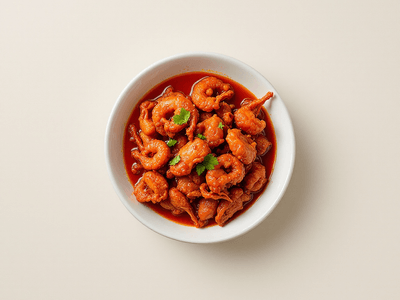
Sambal Udang
Global • non_veg
About Sambal Udang
Prawns in spicy sambal sauce
How to Make Sambal Udang (Traditional & Healthy Version)
Sambal Udang is a beloved Malaysian dish that highlights the vibrant multicultural cuisine of Malaysia. This spicy prawn sambal is renowned for its aromatic blend of local ingredients such as belacan (shrimp paste), cili merah (red chilies), and santan (coconut milk), bringing together flavors from Malay, Chinese, and Indian culinary influences. Traditionally served for lunch, Sambal Udang offers a bold, spicy, and savory profile that pairs beautifully with steamed rice. Originating from coastal regions where fresh seafood is abundant, Sambal Udang is a staple in family gatherings and festive occasions. Its rich, spicy sauce is balanced with the natural sweetness of prawns and the earthiness of local aromatics like daun pandan (pandan leaf) and serai (lemongrass). By making smart ingredient choices and using less oil, this health-conscious version maintains the authentic taste while keeping calories in check—making it perfect for modern Malaysian households looking to enjoy traditional flavors without compromising nutrition.
Ingredients(for 1 bowl with 6-8 medium prawns per serving)
- 200g Fresh prawns (udang) (peeled and deveined)
- 5 pieces Red chilies (cili merah) (seeded for less heat)
- 4 pieces Shallots (bawang merah)
- 2 cloves Garlic (bawang putih)
- 1 small Tomato (chopped)
- 1/2 teaspoon Belacan (shrimp paste) (toasted)
- 1/4 cup Santan (light coconut milk) (use low-fat option)
- 1 stalk Serai (lemongrass) (bruised)
- 1 strip Daun pandan (pandan leaf) (optional, for aroma) - optional
- 1 tablespoon Cooking oil (can use canola or olive oil)
- 1/2 teaspoon Salt (to taste)
- 1/2 teaspoon Sugar (optional, for balance) - optional
Instructions
- 1
Blend red chilies, shallots, garlic, tomato, and belacan to a smooth paste.
5 minutes
Toast belacan before blending for deeper flavor.
- 2
Heat oil in a non-stick pan. Sauté the blended paste on medium heat until fragrant and oil separates.
6 minutes
Low oil prevents excess calories while still extracting aroma.
- 3
Add bruised lemongrass and pandan leaf (if using). Stir for extra aroma.
2 minutes
Remove pandan before serving to avoid bitterness.
- 4
Pour in santan and simmer until slightly thickened.
3 minutes
Use light coconut milk for heart-healthy fats.
Why This Dish is Healthy
This healthy Sambal Udang recipe uses minimal oil, light coconut milk instead of full-fat, and skips deep frying, which reduces unnecessary calories and fats. The high protein content from prawns helps with satiety and muscle maintenance. Incorporating local herbs and spices boosts flavor without needing excess sodium or sugar, making it an excellent choice for lunch in a balanced Malaysian diet.
Sambal Udang is rich in lean protein from prawns, which supports muscle growth and repair. The use of santan (light coconut milk) provides healthy medium-chain fats while keeping saturated fat low. Aromatics like lemongrass and pandan offer antioxidants and anti-inflammatory properties. With only 250 calories per serving, this dish delivers 18g protein, 10g carbs, and 15g fat, making it balanced and suitable for calorie-conscious eaters.
Pro Tips
- 💡Tip 1: Use fresh prawns for the best texture and flavor.
- 💡Tip 2: Toast belacan before blending to reduce pungency and boost aroma.
- 💡Tip 3: Simmer sambal gently to prevent coconut milk from splitting.
Storage & Serving
Store leftover Sambal Udang in an airtight container in the refrigerator for up to 2 days. Reheat gently on the stove to preserve prawn texture. Avoid freezing, as prawns may become rubbery.
Best served: Lunch
Nutrition Facts
| Nutrient | Per 100g |
|---|---|
| Energy | 250.0 kcal |
| Protein | 18.0 g |
| Carbohydrates | 10.0 g |
| Total Fat | 15.0 g |
| Fiber | 2.0 g |
| Sugars | 2.4 g |
| Sodium | 610.0 mg |
| Potassium | 290.0 mg |
| Cholesterol | 65.0 mg |
| Vitamin A | 210.0 IU |
| Vitamin C | 7.0 mg |
| Calcium | 55.0 mg |
| Iron | 1.1 mg |
| Magnesium | 32.0 mg |
| Zinc | 0.7 mg |
| Phosphorus | 120.0 mg |
| Vitamin D | 1.2 IU |
| Vitamin B1 (Thiamine) | 0.1 mg |
| Vitamin B2 (Riboflavin) | 0.1 mg |
| Vitamin B3 (Niacin) | 1.5 mg |
| Vitamin B6 | 0.1 mg |
| Vitamin B12 | 0.6 µg |
| Folate | 22.0 µg |