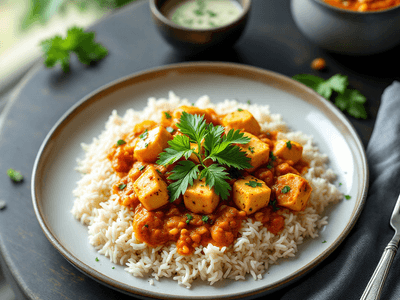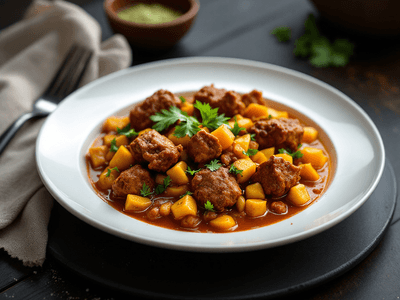
Kerala Style Mutton Curry
South Indian • All Foods
How to Make Kerala Style Vegetarian Mutton Curry (Traditional & Healthy Version)
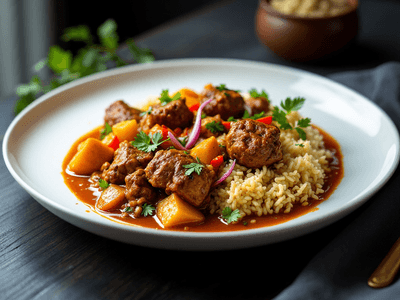
Kerala Style Mutton Curry is a classic South Indian dish, known for its bold flavors, rich coconut-based gravy, and aromatic spices. Traditionally made with tender mutton, this vegetarian adaptation uses protein-rich soya chunks to mimic the texture and satisfaction of the original, making it perfect for those seeking a healthy Indian snack or main. The curry encapsulates the essence of Kerala cuisine—vibrant, earthy, and deeply spiced with ingredients like black pepper, curry leaves, and coconut milk. Served typically with steamed rice or appams, this dish is a comforting staple in many Malayali households. What makes this vegetarian Kerala mutton curry truly special is its ability to deliver authentic flavors without sacrificing nutrition. The use of soya chunks provides a wonderful bite, while fresh coconut, fennel, and whole spices lend a distinct South Indian character. Easy to prepare and full of wholesome ingredients, this curry is ideal for anyone who wants to enjoy traditional Kerala cuisine in a lighter, plant-based way. Whether you're hosting a festive meal or looking for a satisfying snack, this healthy vegetarian curry is a great choice for both taste and wellbeing.
Ingredients(for 1 bowl curry (about 200g) + 1 small serving brown rice or appam)
- 1 cup Soya chunks (Textured vegetable protein, soaked)
- 1 large Onion (finely sliced)
- 1 medium Tomato (chopped)
- 1/2 cup Coconut milk (thick, fresh or canned)
- 2 tbsp Fresh grated coconut
- 10-12 Curry leaves (fresh)
- 1 tbsp Ginger-garlic paste
- 1 tsp Coriander powder
- 1/2 tsp Red chilli powder (adjust to taste)
- 1/2 tsp Black pepper powder (freshly ground)
- 1/2 tsp Fennel seeds
- 1 inch Cinnamon stick
- 2 Cloves
- 1 tbsp Coconut oil (cold-pressed preferred)
- to taste Salt
Instructions
- 1
Soak the soya chunks in hot water for 5 minutes. Squeeze out excess water and set aside.
5 minutes
Rinse soya chunks in cold water after soaking to remove any raw taste.
- 2
Heat coconut oil in a heavy-bottomed kadai. Add fennel seeds, cinnamon, and cloves. Sauté until fragrant.
2 minutes
Do not burn the spices; keep the flame low to release maximum aroma.
- 3
Add sliced onions and curry leaves. Sauté until onions turn golden brown.
5 minutes
Add a pinch of salt to help onions caramelize faster.
- 4
Stir in ginger-garlic paste and sauté until raw aroma disappears. Add chopped tomatoes and cook until mushy.
3 minutes
Cover with a lid to soften tomatoes quickly.
Why This Dish is Healthy
Replacing mutton with soya chunks significantly reduces saturated fat and cholesterol, while boosting plant-based protein and dietary fiber. Cooking with coconut oil and milk, in moderate amounts, adds beneficial fats without excess calories. Minimal oil, no deep frying, and inclusion of whole spices make this dish light yet flavorful. It's a smart pick for weight management, diabetes, and vegetarian diets seeking authentic South Indian taste.
This Kerala Style Vegetarian Mutton Curry is rich in protein from soya chunks, healthy fats from coconut, and packed with antioxidants from spices like black pepper, turmeric, and coriander. Coconut milk provides lauric acid and essential minerals, while onions, tomatoes, and curry leaves add fiber, vitamins A and C, and phytonutrients. The absence of animal fat also keeps cholesterol in check, making it a heart-friendly choice for calorie-conscious eaters.
Pro Tips
- 💡Tip 1: Soak soya chunks well and squeeze out all water for best texture.
- 💡Tip 2: Use fresh coconut milk for authentic flavor.
- 💡Tip 3: Roast spices gently to avoid bitterness.
- 💡Tip 4: Rest the curry before serving for flavors to meld.
Storage & Serving
Keeps for 6-8 hours at room temperature. Refrigerate for up to 2 days.
Best served: Breakfast or Lunch
Nutrition Facts
| Nutrient | Per 100g |
|---|---|
| Energy | 400.0 kcal |
| Protein | 10.5 g |
| Carbohydrates | 4.2 g |
| Total Fat | 8.1 g |
| Fiber | 1.1 g |
| Sugars | 1.2 g |
| Iron | 1.7 mg |
| Calcium | 22.0 mg |
| Sodium | 340.0 mg |
| Potassium | 260.0 mg |
| Cholesterol | 45.0 mg |
| Vitamin A | 58.0 IU |
| Vitamin C | 5.0 mg |
| Magnesium | 22.0 mg |
| Zinc | 2.1 mg |
| Phosphorus | 110.0 mg |
| Vitamin D | 0.2 IU |
| Vitamin B1 (Thiamine) | 0.1 mg |
| Vitamin B2 (Riboflavin) | 0.1 mg |
| Vitamin B3 (Niacin) | 2.8 mg |
| Vitamin B6 | 0.2 mg |
| Vitamin B12 | 1.2 µg |
| Folate | 11.0 µg |