Vegan Bhindi Fry
Lunch • India
How to Make Vegan Bhindi Fry (Traditional & Healthy Version)
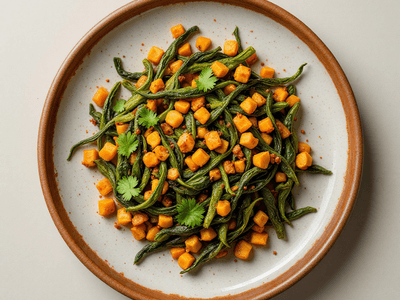
Vegan Bhindi Fry, also known as Vendakkai Poriyal in South India, is a beloved lunch dish celebrated for its simplicity and vibrant flavors. Bhindi (okra) is a staple in Indian households, especially in the southern states like Tamil Nadu, Andhra Pradesh, and Karnataka, where it is often prepared with minimal oil and aromatic spices. This dry stir-fry is light, crisp, and bursting with the earthy taste of bhindi, complemented by the gentle heat of green chilies and the warmth of mustard seeds. Traditionally cooked on a tawa (griddle) or in a kadhai (wok), Vegan Bhindi Fry is ideal for those seeking a healthy, plant-based side for rice or chapati. With no dairy, eggs, or animal products, it aligns with a vegan lifestyle and is naturally gluten-free when made without besan (gram flour). Its subtle spices and minimal oil make it a great choice for calorie-conscious eaters, and its fiber-rich profile makes it both filling and nutritious. This dish is often served during the South Indian festival of Pongal as a sattvic (pure, vegetarian) accompaniment. It brings together the essence of Indian home cooking: fresh vegetables, wholesome spices, and a mindful approach to health. Vegan Bhindi Fry is a testament to how Indian cuisine can be both delicious and health-conscious, making it a perfect choice for everyday lunches.
Ingredients(for 1 medium bowl (approx. 150g cooked bhindi fry))
- 250 grams Bhindi (Okra) (also called lady finger)
- 1 medium, sliced Onion (pyaz)
- 1/2 tsp Mustard seeds (rai)
- 8-10 leaves Curry leaves (kadi patta)
- 1/4 tsp Turmeric powder (haldi)
- 1/2 tsp Red chili powder (lal mirch)
- 1, slit Green chili (hari mirch)
- to taste Salt (namak)
- 1.5 tsp Cold pressed groundnut oil (or coconut oil for flavor)
- 1 tsp Lemon juice (nimbu ras) - optional
Instructions
- 1
Wash bhindi thoroughly. Dry completely with a kitchen towel to avoid stickiness. Slice off the tips and cut each bhindi into thin rounds.
5 minutes
Moisture causes sliminess; ensure bhindi is dry before cutting.
- 2
Heat oil in a tawa or heavy-bottomed kadhai over medium flame. Add mustard seeds and allow them to splutter, then add curry leaves and green chili.
2 minutes
For authentic flavor, use cold-pressed groundnut or coconut oil.
- 3
Add sliced onions and sauté until translucent. This adds sweetness and depth to the dish.
3 minutes
Do not brown the onions; just soften them.
- 4
Add the sliced bhindi, stir well, and cook uncovered on medium heat. Let it fry, stirring occasionally, until the stickiness reduces.
8 minutes
Avoid covering; steam makes bhindi slimy.
Why This Dish is Healthy
Vegan Bhindi Fry is a healthy choice due to its plant-based ingredients, low oil content, and high fiber. It helps regulate blood sugar due to its low glycemic index and can be enjoyed by diabetics. The dish is also rich in essential vitamins and minerals, making it beneficial for heart health, digestion, and overall wellness. Its simple preparation ensures nutrients are retained.
Bhindi (okra) is high in dietary fiber, which aids digestion and promotes satiety, making it an excellent option for weight management. It contains vitamin C, vitamin K, folate, and potassium, supporting immune health and bone strength. The use of minimal oil and natural spices keeps the calorie count low, while onions and curry leaves add antioxidants. This vegan dish is cholesterol-free, low in fat, and suitable for a gluten-free diet (when besan is avoided).
Pro Tips
- 💡Tip 1: Always dry bhindi completely before cutting to avoid stickiness.
- 💡Tip 2: Do not cover the pan while cooking bhindi to keep it crisp.
- 💡Tip 3: Add lemon juice at the end to enhance taste and reduce sliminess.
Storage & Serving
Store leftovers in an airtight container in the refrigerator for up to 2 days. Reheat on a tawa for best texture. Avoid freezing, as bhindi can become mushy.
Best served: Lunch
Nutrition Facts
| Nutrient | Per 100g |
|---|---|
| Energy | 160.0 kcal |