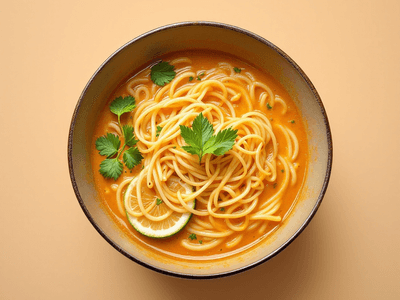
Laksa Malaysia Style
Lunch • India
How to Make Laksa Malaysia Style (Traditional & Healthy Version)
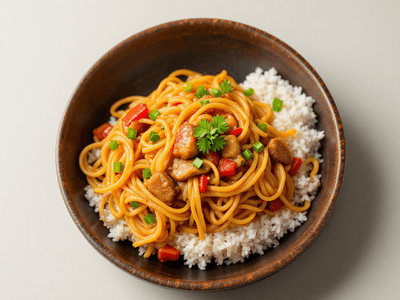
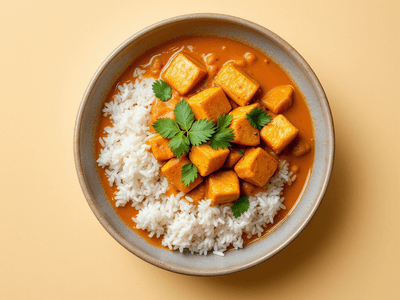
Laksa Malaysia Style, a vegetarian adaptation suited for Indian palates, is a vibrant noodle soup that combines creamy coconut milk with aromatic spices, vegetables, and rice noodles (seviyan). Though Laksa is rooted in Malaysian cuisine, it has found a unique place in India, especially in regions like Kerala and Tamil Nadu, where coconut and rice are staple ingredients. The dish brings together bold flavors—spicy, tangy, and slightly sweet—making it a favorite for lunch gatherings or festive occasions. Indian households have embraced Laksa Malaysia Style, infusing it with local ingredients such as fresh dhania (coriander), hari mirch (green chillies), and paneer as a protein substitute. This vegetarian Laksa is an excellent choice for those seeking a balanced, hearty meal that doesn't compromise on taste or health. Its rich, warming broth and delicate noodles make it perfect for monsoon lunches or special dinners during festivals like Onam, where coconut-based dishes are celebrated. Laksa Malaysia Style stands out for its versatility and ease of preparation. It is not only delicious but can also be made lighter and healthier by using whole grain noodles and adding plenty of seasonal veggies. The comforting bowl of Laksa can be shared with family and friends, making it a wonderful addition to India's diverse culinary repertoire.
Ingredients(for 1 medium bowl (approx. 350 ml))
- 100 grams Rice noodles (seviyan) (can use whole wheat seviyan for extra fiber)
- 1 cup Coconut milk (nariyal doodh) (fresh or canned)
- 2 cups Vegetable broth (homemade or store-bought)
- 100 grams Paneer (cubed, protein substitute)
- 1/2 cup Carrots (julienned)
- 1/2 cup Bell peppers (shimla mirch) (sliced)
- 1/3 cup Bean sprouts (moong sprouts for Indian touch)
- 2 tbsp Fresh coriander (dhania) (finely chopped)
- 1 tbsp Ginger-garlic paste (adi masala)
- 1 Green chilli (hari mirch) (finely chopped)
- 2 tsp Lemon juice (nimbu ras) (for tang)
- to taste Salt (namak)
- 1 tbsp Oil (preferably olive or mustard (sarson) oil)
Instructions
- 1
Boil rice noodles (seviyan) in salted water until just cooked. Drain and set aside.
5 minutes
Do not overcook the noodles; rinse under cold water to prevent sticking.
- 2
Heat oil in a kadhai. Add ginger-garlic paste and green chilli, sauté till aromatic.
3 minutes
For a milder flavor, reduce green chilli or use deseeded chillies.
- 3
Add carrots and bell peppers, stir-fry on medium flame until slightly tender.
4 minutes
Use seasonal veggies for extra nutrition and taste.
- 4
Pour in vegetable broth and bring to a gentle boil. Add salt as needed.
3 minutes
Homemade broth enhances flavor and reduces sodium.
Why This Dish is Healthy
This vegetarian Laksa Malaysia Style recipe uses wholesome, minimally processed ingredients, making it a lighter option for lunch. The use of paneer instead of tofu increases protein content, while seasonal vegetables boost micronutrient intake. Coconut milk adds a creamy texture without relying on heavy cream or butter, keeping the dish heart-healthy. Whole wheat seviyan can be substituted for extra fiber, supporting weight management and digestive health.
Laksa Malaysia Style is packed with nutrients from vegetables, paneer, and coconut milk. Paneer is a rich source of protein and calcium, supporting muscle and bone health. Coconut milk provides healthy fats and essential minerals like magnesium and potassium. Vegetables add fiber, vitamins A and C, and antioxidants, while rice noodles supply complex carbohydrates for sustained energy. This balanced meal helps maintain blood sugar levels and promotes satiety.
Pro Tips
- 💡Tip 1: Use fresh coconut milk for best flavor and nutrition.
- 💡Tip 2: Add vegetables of your choice to boost fiber and vitamins.
- 💡Tip 3: Garnish with coriander and lemon juice just before serving for a refreshing taste.
Storage & Serving
Store leftover Laksa in an airtight container in the refrigerator for up to 2 days. Reheat gently on a stove, adding a splash of broth or coconut milk to refresh texture. Avoid freezing as coconut milk may separate.
Best served: Lunch
Nutrition Facts
| Nutrient | Per 100g |
|---|---|
| Energy | 480.0 kcal |